Wellness Resources
I Almost Fainted: Heat Syncope and What You Need to Know
After five hours on the water, Dr. Jen experienced a warning sign she almost brushed off. Here’s what heat syncope is, why it can happen even when you’re fit and hydrated, and what to do when that sudden wave of dizziness hits.
Recently, I almost fainted.
I was in the heat when that unmistakable wave hit: lightheadedness, weakness, and that strange sensation that the world is suddenly becoming very far away. As a doctor, I knew what was happening. As the person it was happening to, I can tell you it was still unnerving.
The culprit was heat syncope, essentially fainting or nearly fainting because heat has temporarily reduced blood flow to your brain. It was 90°F, and I had been in the sun, swimming, and on the water for five hours. Though I was drinking water (not water plus electrolytes) and I didn’t feel particularly hot, nor was I sweating profusely, my physiology clearly registered otherwise.
After posting my experience with this last week on Instagram and seeing hundreds of comments from people who’ve been through the same thing, I knew there was more to cover here.
What happens during heat syncope?
The CDC defines heat syncope as dizziness or a brief fainting episode typically associated with prolonged standing or suddenly rising in the heat, with dehydration and lack of heat acclimatization contributing to the risk.
When we're hot, blood vessels near the skin dilate so we can release heat. That is normally a brilliant cooling mechanism. But dilated blood vessels also mean blood pressure can fall. Add sweating, dehydration, and prolonged standing or suddenly getting up, and blood can pool in the legs rather than returning efficiently to the heart and brain.
For a moment, cerebral blood flow drops. Cue the dizziness, tunnel vision, nausea, sweating, or an actual faint.
Heat illness is a spectrum
I think of heat-related illness as a continuum, although someone doesn't necessarily progress neatly through every stage.
At the milder end, you can develop heat cramps, often after heavy sweating and loss of fluid and salt. I had neither cramps nor heavy sweating prior to my episode.
Then there’s heat syncope, where dizziness or fainting becomes the predominant symptom.
Heat exhaustion is more serious. Symptoms can include heavy sweating, weakness, headache, nausea, dizziness, thirst, and decreased urine output. It reflects significant loss of water and salt.
At the dangerous end is heat stroke, a medical emergency in which the body's thermoregulatory mechanisms fail. Confusion, altered mental status, seizures, loss of consciousness, and very high body temperature are major warning signs. Heat stroke can cause permanent organ damage or death, and requires immediate treatment and rapid cooling.
Who is at risk?
Technically? All of us.
You can be fit, healthy, and accustomed to exercising and still get into trouble when temperature, humidity, exertion, and hydration line up badly. This is why when I see runners out during heat waves, because ‘they think they’re fit and can handle it,’ I always cringe. Everyone is at risk. Everyone.
Risk increases further with age. The CDC notes that adults 65 and older adapt less effectively to sudden temperature changes—and are more likely to have medical conditions or take medications that interfere with temperature regulation or sweating.
For women over 50, pay particular attention to medications. Diuretics, certain blood-pressure medications, and other drugs can contribute to dehydration or hypotension. Alcohol can worsen dehydration. And if you’re exercising vigorously outdoors, traveling somewhere much hotter than home, or simply aren’t acclimated to the temperature, your risk goes up.
What to do if you feel like you’re about to faint
My number one instruction is wonderfully unglamorous: Get down on the ground and do it quickly. Ideally, put your back against a wall for support, but if a wall is not close by, just get to the ground immediately.
Do not try to power through it.
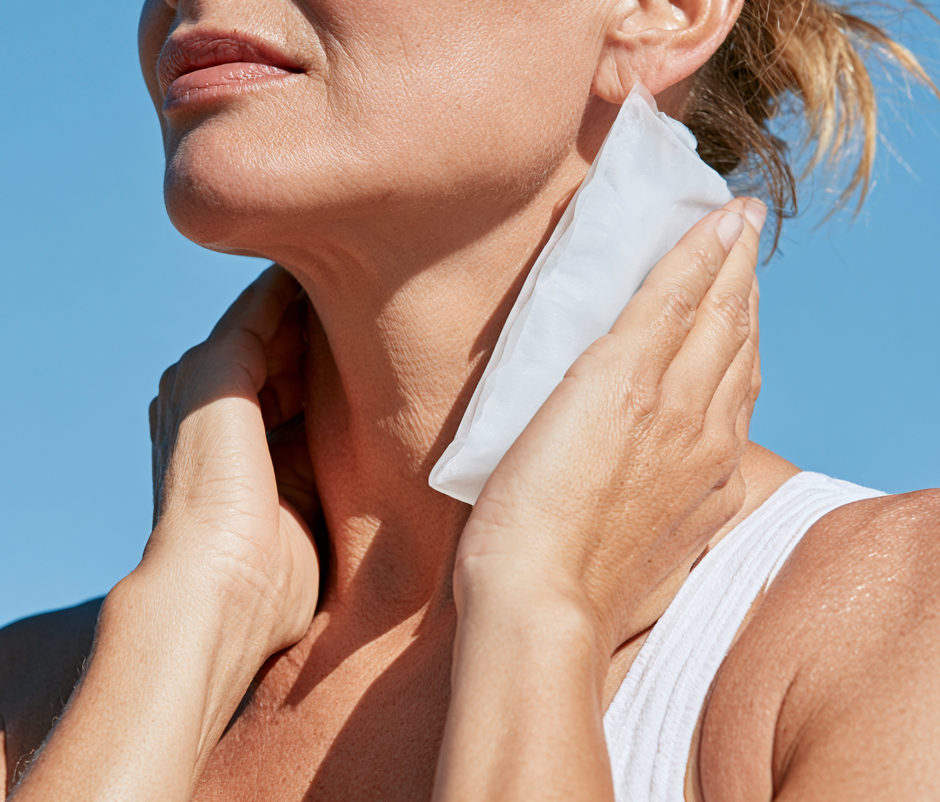
Sit or, preferably, lie down somewhere cool. Elevating your legs can help return blood toward your heart and brain. Get out of direct sun, loosen unnecessary clothing, and cool your skin. If you’re awake, alert, and able to swallow safely, slowly drink cold water or an electrolyte-containing beverage. Putting an ice pack on your neck, groin, or wrist to hit major arterial pulse points can not only feel good but can also assist in cooling core temperature as well.
And don't immediately stand back up because you suddenly feel better. Give your circulation time to recover. If there is confusion, seizure, persistent loss of consciousness, or concern for heat stroke, call 911 and begin rapid cooling.
But not every faint is from the heat
This is important.
In otherwise healthy adults, the most common cause of fainting is reflex or vasovagal syncope, the classic faint triggered by things like prolonged standing or emotional stress. You often get warning symptoms: warmth, nausea, and lightheadedness.
Orthostatic hypotension, which occurs when blood pressure drops significantly after standing, becomes increasingly common with age. This is typically more sudden, and can occur after getting up from bed or even from a seated position at the table. Dehydration and medications are frequent contributors.
While many fainting episodes are benign and isolated, fainting during exercise, while lying down, without any warning, or accompanied by chest pain, palpitations, or shortness of breath needs medical evaluation. So does recurrent syncope, an abnormal cardiac history, or a family history of unexplained sudden death. Take these seriously and get a thorough medical evaluation.
My takeaway
My near-faint was a useful reminder that being healthy does not make us physiologically invincible.
Heat changes circulation. Blood pressure can fall quickly. And sometimes your body gives you about 30 seconds of warning before gravity gets involved.
If you feel that wave coming, don't be stoic. Stop. Get down and get cool. Hydrate and pay attention to what your body is telling you.