Healthy Living
The Water I drink Day in and Day Out
We drink more water than anything else, yet few of us know what's actually in it. Here's why Dr. Jen chose Loonen, what makes it different from most bottled waters, and why hydration is about more than simply drinking enough—it's also about the quality of the water you consume.
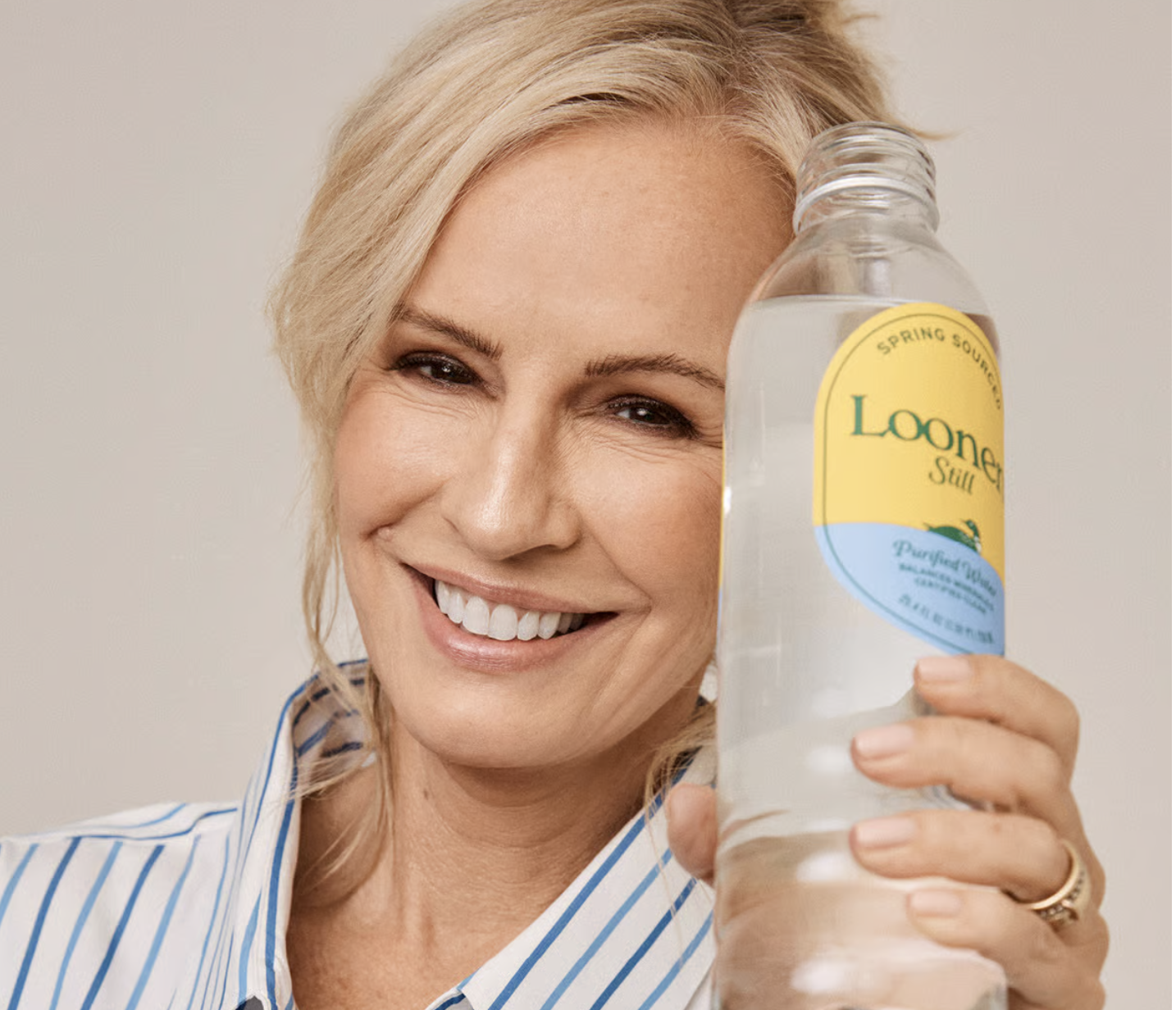
People ask me all the time what I actually drink. As a doctor and a nutritionist, I have a rule I have lived by for years: I do not recommend anything to my friends, my patients, my followers, or my readers that I would not do, do not do, or have not done myself. So when I tell you which water earned a permanent spot in my fridge, and enough of my conviction that I invested in the company behind it, I mean every word. Let me tell you about Loonen, then walk you through what actually goes into it—because with this brand the process is the whole point.
First, What Loonen Actually Is
If you’ve never heard of it, here’s the short version. Loonen pairs the highest-quality source with the highest-quality filtration to consistently produce some of the cleanest water on the market. Every bottle is spring-sourced, filtered for purity, balanced with minerals, and bottled only in glass. Every batch is tested by independent, accredited third-party labs, and you can pull up the results yourself by scanning the QR code on the bottle. The founder, Clara Sieg, started it after her own IVF journey and pregnancy sent her looking for a water she genuinely trusted for her family, and coming up empty.
Why a Water Like This Even Needs to Exist
Water is the item we consume more than anything else. It’s our most consumed nutrient and the delivery system for every other one, making up roughly 60% of an adult body and closer to 75% of a newborn's. It should be the most trustworthy thing in the glass. Yet nearly half of US tap water contains PFAS, and more than half tests positive for lead. There are no federal standards for microplastics in tap or bottled water, and bottled water is actually held to a looser standard than tap. None of that means our water is universally unsafe. It means we make a daily decision with incomplete information. Helping to close that gap is the entire reason Loonen exists.
How It's Made, and Why That's the Whole Point
I went looking at how Loonen is actually made, because "clean water" is easy to say and hard to prove. Here’s the whole chain, quickly:
- Source and purity. Under FDA rules, the name on the label decides what you're allowed to do to the water. To call it spring, artesian, or mineral water, you can't filter it, so whatever the source carries comes straight through. If you filter or purify it, you give up the credit for the source. That's a big part of why most brands start with municipal tap water, and the chemical history that comes with it, then clean it up from there. Loonen refuses the tradeoff. It starts with pristine spring water, purifies it further through a non-chemical, physical membrane process, then remineralizes with lab-tested minerals like French sea salt rather than refined table salt.
- Testing, every time they bottle. We are not talking about "tested" as a marketing word. Every single production is screened by independent, accredited labs (Eurofins, EMSL, Light Labs, and NSF) across far broader panels than the industry norm: microplastics, PFAS, heavy metals, and hundreds of other contaminants. Loonen is NSF certified, which means recurring audits rather than a logo you buy, and it holds itself to the stricter health goal, not just the legal limit.
- Transparency. Scan the QR code on any bottle and you can see the third-party test results, in plain English, with the limits shown right next to the numbers. No PDFs to request, no chemistry degree required.
- Packaging. Glass only. It moves through stainless steel tankers and piping so it never touches plastic before bottling, and the caps are unpainted aluminum and fully PFAS and BPA free.
The one thing to take from all of it: water quality is cumulative. It’s not any single step; it’s the entire chain from source to glass that makes water clean, and Loonen is one of the very few brands that refuses to cut a single link, even when the cheaper, faster option is sitting right there. This is what "not just pure, but proven" actually looks like in practice.
Why You Should Care
Hydration is one of the highest-leverage things your body relies on and one of the easiest to overlook. Water regulates your temperature, cushions your joints, moves nutrients into your cells and waste out of them, and keeps your brain running. The research here is fairly consistent: even mild dehydration, on the order of 1 to 2% of body water, has been shown to measurably affect concentration, memory, mood, and reaction time. Hydration is not a wellness nicety. It’s baseline function.
Here is the part that compounds. Water is the delivery system for nearly everything else you take in. When that delivery system is clean, it does its job without also carrying microplastics, PFAS, or heavy metals along for the ride. So the benefit stacks: you’re hydrating enough, and what you’re hydrating with is working for you instead of quietly against you. Two levers, pulled in the same direction. That is what it means to get your hydration working for you rather than against you.
The Easy Part
Loonen takes on the unglamorous part—the sourcing, the filtration, the obsessive quality—so you have peace of mind when reaching for a glass. For me, it comes down to this: a beautiful glass bottle of water, cold, clean, and exactly what it says it is. No asterisks. No footnotes.
Find Loonen at Sprouts stores nationwide, retailers across the country, and on Amazon.
We’re doing a giveaway with Loonen later this month! Follow me on Instagram for more details and your chance to win.
Get clear, science-backed answers on menopause, weight loss, and more delivered to your inbox every Wednesday. Subscribe to Today’s Ajenda here!